

 Facebook
 X
X
 Pinterest
 Copy Link
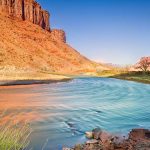
If you’ve been scrolling headlines about Lake Mead before your move to Las Vegas, it’s easy to feel uneasy. But the reality on the ground is far more reassuring than the news cycle suggests. Southern Nevada isn’t scrambling to react to a water crisis — we’ve been planning for one for over two decades, and it shows. Understanding how our water system actually works is one of the best things a new resident can do before putting down roots here.
Start with the numbers. Nevada holds the smallest Colorado River allocation of any of the seven states that share it — just 300,000 acre-feet a year — and Southern Nevada Water Authority (SNWA) has consistently used less than that. Even as the Las Vegas Valley has added roughly 750,000 residents since 2002, per-capita water use has dropped by about 55% over that same period. That’s not a coincidence; it’s the direct result of some of the most aggressive conservation policy in the country, from strict seasonal watering restrictions to the “Cash for Grass” program, which has paid residents and businesses to remove more than 200 million square feet of ornamental turf since 2000.
The infrastructure behind the scenes matters just as much as the conservation habits. SNWA built a deep-water intake and a low-lake-level pumping station specifically so that Las Vegas can keep drawing its water from Lake Mead regardless of the reservoir’s elevation — a safeguard most Colorado River communities don’t have. On top of that, nearly all indoor water used in the valley is treated and returned to Lake Mead through return-flow credits, meaning a shower or load of laundry here doesn’t just disappear — it goes right back into the system. Outdoor watering, not indoor use, is where nearly 60% of the valley’s water goes, which is exactly why local restrictions target lawns and landscaping rather than life inside the home.
None of this means the Colorado River isn’t under real, long-term stress — it is, and the seven basin states are still negotiating how to share the cuts fairly through 2028. But “under stress” and “running out” are very different stories, and Las Vegas has spent twenty years positioning itself as the most water-secure city on the river, not the most vulnerable. If you’re relocating here, that’s a fact worth knowing — and one more reason this can feel like home.


